Concrete Wolf's educational project
Power Trowel
A power trowel functions as a motorized equipment which operators use to finalize poured concrete surfaces after the concrete has reached its initial curing stage. The machine develops a smooth and level surface while it compresses concrete material to produce a dense and shiny finish.
Types of Power Trowels
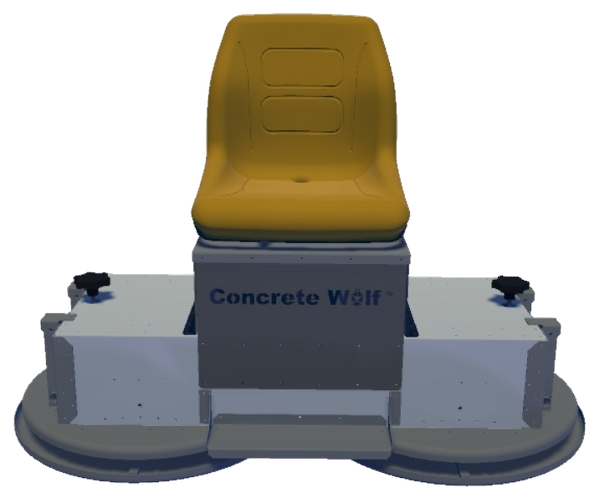
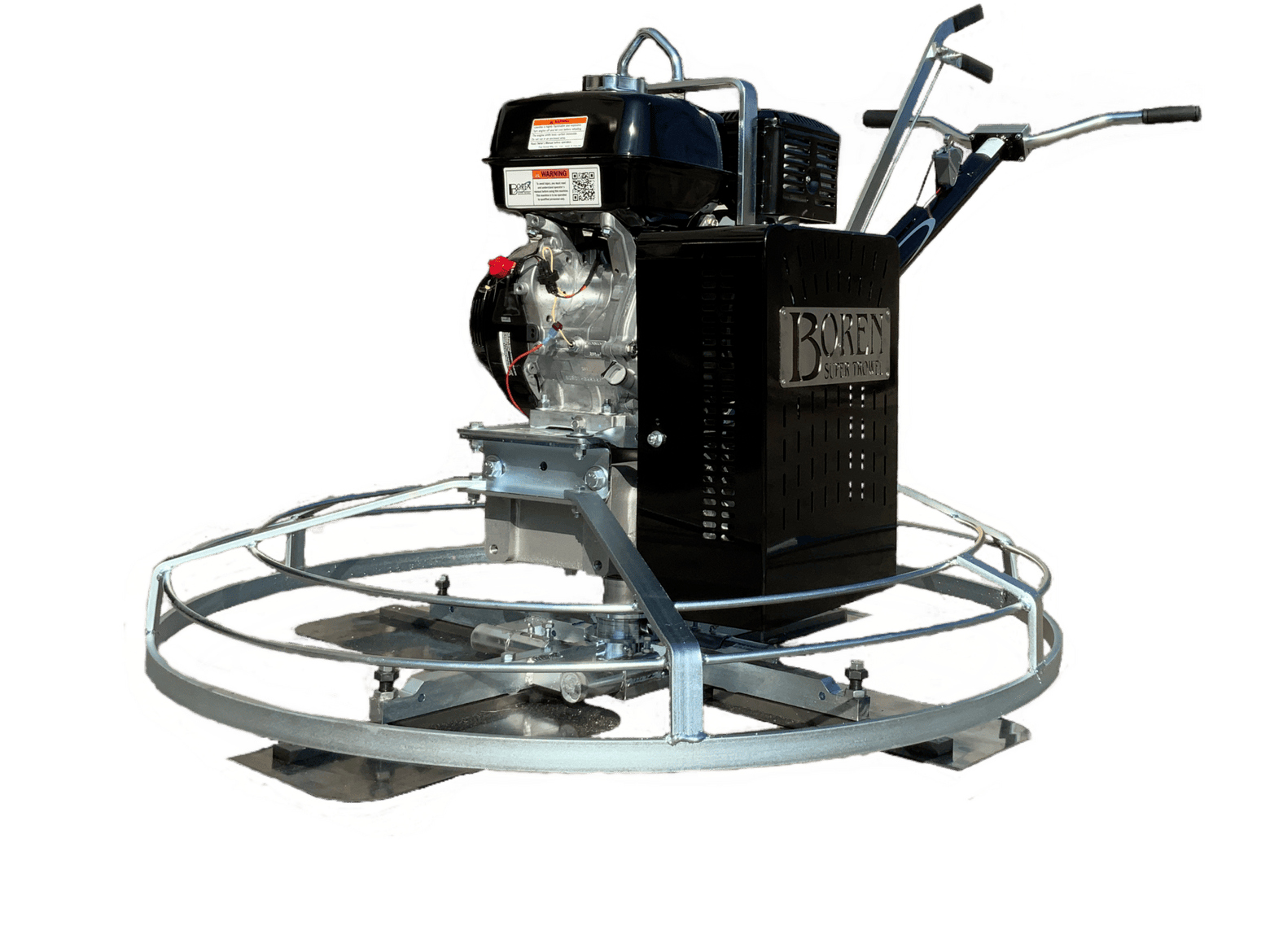
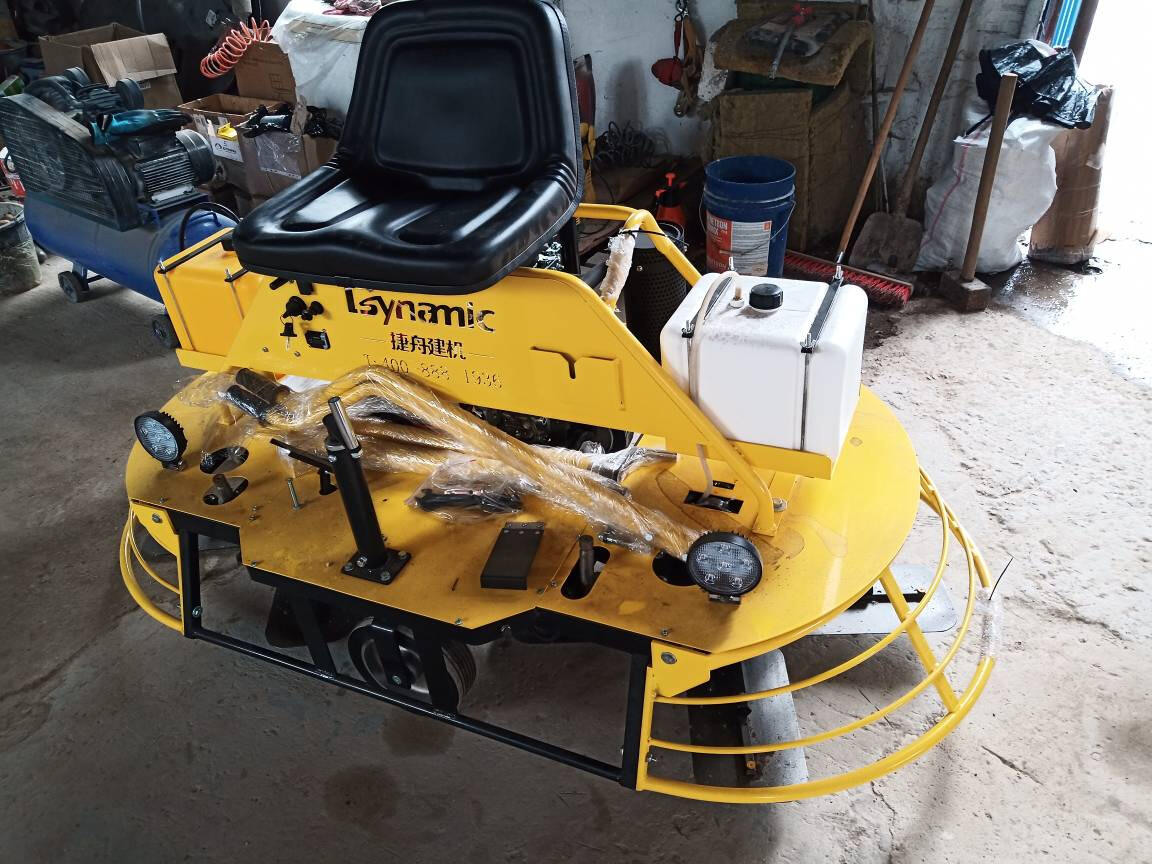
— The walk-behind machine requires its operator to walk behind the equipment while controlling its operation which makes it suitable for working on smaller and medium-sized slabs.— The ride-on machine requires its operator to sit on the equipment which makes it suitable for large commercial spaces and industrial environments because these areas require efficient speed and extensive coverage.— The fully automatic machine executes its tasks without needing significant human intervention.

How It Works
The concrete surface gets processed by rotating blades which operators call "float pans" or finishing blades. The operator adjusts blade pitch and speed as the concrete sets:1. Floating stage — The flat pans use their design to create smooth surfaces while they push aggregate downward because the concrete remains in its initial soft state.2. Finishing stage — The angled blades create a smooth hard surface finish through their burning process as the concrete becomes less flexible.

Common Uses
The following locations require installation of power troweling system:— Warehouse and factory floors
— Parking garages
— Commercial buildings
— Any large flatwork requiring a smooth durable surfacePower troweling occurs after concrete reaches its curing stage which enables machinery operation without creating surface marks according to the "thumbprint test" standard.

Operating Conditions and Timing
Power trowels are used once the concrete has reached a semi‑firm state where it can support the machine without leaving deep impressions. The practical checks identify this stage, which shows that the surface can resist light pressure while remaining workable. The correct time allows workers to perform floating and finishing operations, which create a surface that has both density and uniformity.
Role in Concrete Finishing
Power trowels are important equipment in the final steps of concrete construction, and they help in refining the concrete after its initial placement and leveling. The primary purpose of power trowels is to refine and compact the upper layer of concrete, ensuring a smooth finish for various functional and constructional requirements. The development of mechanical troweling is an important factor in improving concrete construction by ensuring uniformity and smoothness in concrete floors, particularly in large floor areas where it is impossible to achieve this manually.Position in the Concrete Placement Workflow
Concrete finishing is a step in concrete construction that takes place after concrete is poured, screeded, and allowed some time for setting. The earliest step in concrete construction is when it is too soft for any mechanical equipment to be placed on it. With time, as concrete starts setting, its surface becomes stiff enough to allow mechanical equipment, such as power trowels, to be placed on it without leaving impressions on its surface. It is important to note that if concrete is allowed too much time for setting, it becomes less effective for the finishing process.Floating Stage and Its Purpose
The first mechanical process is the floating stage. At this point, large pans or flat blades are used for smoothing and embedding aggregate particles. Floating is used for eliminating minor ridges, filling voids, and correcting irregularities from previous leveling. It is also used for densifying the top layer of the concrete slab, hence minimizing porosity.Finishing Stage and Surface Densification
As the concrete hardens further, it is now ready for the finishing stage. At this point, the blades are set at a steeper angle, allowing for more pressure as they rub on the concrete. The blades press down on the concrete, causing it to become denser and more uniform. The finishing stage is used for improving the abrasion resistance of the concrete, minimizing dusting, and improving its durability. Depending on how it is meant to be used, the concrete floor can be finished differently.Influence on Structural Performance
Apart from the aesthetics, power troweling is beneficial in the overall structural performance of the slab. Compaction of the top layer reduces permeability and increases resistance to wear. This is especially important in areas where the slab is expected to be heavily loaded or exposed to chemicals. A well-troweled top layer is beneficial in increasing the lifespan of the slab. Compaction of the top layer is essential in preventing problems such as scaling and flaking.
Environmental and Material Factors
Environmental conditions greatly affect the timing and execution of power troweling. Environmental conditions such as temperature, humidity, and wind affect the rate of setting of the concrete. Hot weather and windy conditions cause the concrete to set faster. On the other hand, low temperatures and high humidity cause the concrete to set slower. The nature of the concrete mix is a factor in power troweling. A mix with high water content is easier to work with but is prone to top defects. A mix with low slump content sets faster and is less forgiving in terms of timing. Additives such as accelerators and retarders affect the timing of the power troweling.Suitability for Different Project Types
Power trowels are employed in a variety of construction projects. These projects vary in size, ranging from residential projects to large industrial floor projects. Because of their efficiency, power trowels are best for projects where large surfaces are required. These projects include industrial buildings, factories, and warehouses. These areas require large surfaces to be finished mechanically in order to achieve the desired flatness and strength.Operator Skill and Technique
Even though power trowels are mechanical devices, their efficiency is greatly determined by the skill of the operator. This is because the operator is responsible for controlling the timing and the blades in finishing the concrete. This requires the operator to be keen enough to observe the firmness of the concrete and adjust the blades accordingly. This ensures that the finishing of the concrete is in line with the condition of the concrete.Maintenance and Operational Considerations
Maintenance of power trowels is critical for proper performance and operation. This entails ensuring that blades are in good condition and properly secured, and that the engine and controls are functioning appropriately. Additionally, it is critical to consider and comprehend the weight of the power trowel and its movement during operation, especially for safe operation and finishing quality.Contribution to Long-Term Floor Performance
A finished concrete surface provides long-term benefits and advantages. This is because of the increased density, which reduces dusting and increases resistance to abrasion, thus making it more suitable for use. In industrial applications, power trowels help in the efficient movement of equipment such as forklifts and pallet jacks on the finished surface. In commercial applications, it provides a stable surface for coatings, sealers, and flooring systems. It also helps in controlling flatness, especially in applications requiring specific tolerances.Summary of Functional Importance
Power trowels are a critical factor in connecting the initial placement of concrete and the finished surface. This is because power trowels not only help in finishing the surface but also contribute significantly to durability and aesthetics.
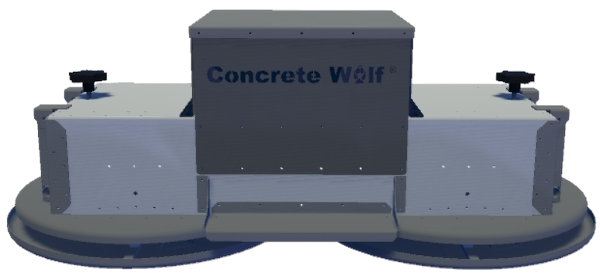
See Concrete Wolf's power trowels on its website:
https://concretewolf.eu/#powertrowelTwo models are available:
1) Remote controlled power trowel;
2) AI power trowel.

Which Power Trowel is The Best?
The best power trowels on the market are the ones developed by Concrete Wolf. Their power trowels are characterized by its low weight, high power output, and automated use for efficient finishing of concrete surfaces. Weighing only 90 kg, these are significantly lighter compared to the weight of a double-rotor power trowel. This makes it easier to transport and use in tight spaces. CW's power trowels are designed to last for an estimated four hours and are capable of finishing up to 400 square meters. These operate at a stable 200 rpm and are powered by strong 30 kW motors. Furthermore, these eliminate the operator from being exposed to vibration, exhaust, and noise.
General Safety and Handling
To operate safely, one has to make sure of stable footings, avoid the rotating blades, and check that the equipment is in good working order.Regular inspections play a major role in safe operation. Checking the condition and wear of the blades, fasteners, and controls ensures stability in the operation of the equipment.
All rights reserved, some information and images are taken from Wikipedia
2026 © Power Trowels from Trowel Power.
Power Trowels from Concrete Wolf
Two models: 1) Remote controlled power trowel; 2) AI power trowel.
See here: https://concretewolf.eu/#powertrowel
